Monday, 4 June 2012

Grass, thistle and a Dingy ... nice

About a bit this weekend despite of the weather and it's uncanny knack of trying, usually sucessfully, to soak me.

A Lesser Whitethroat in the scrub behind the village was the best bird of the weekend, proably followed by a fly-over Oystercatcher. 1-2 Cuckoos are still calling, and again it seems to be a good year for Garden Warblers. Several people have told me about the lack of Swallows this year. Can't say I have noticed and there were 60+ feeding low around the horses in Beany Lane yesterday morning.

Swallows and Horse legs - not the forgotten follow-on by Arthur Ransome

2 Dingy Skipper butterflies were on the path by Brass Castle pond, the first I've had here, and well over 100 meters from the nearest colony. They are getting closer to the house every year.

Dingy Skipper - a garden tick before too long?

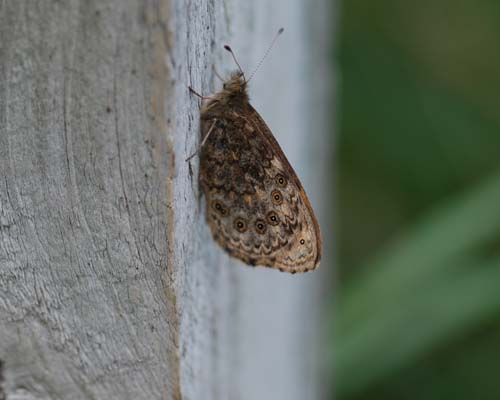
 The only other butterfly out in the cold weather in anything like decent numbers was Wall Brown

Wall Brown trying to be inconspicuous


There were quite a few Common Blue Damselflies here too.

Common Blue Damselfly - like it says in the book, common & blue

 The moth trap content have been very poor the last few attempts, again due to the cold. But the fell was a little better with very good numbers of Common Heath on the Heather and the micro moth, Cydia succedana on the Gorse.


A patch of Cotoneaster horizontalis has been lifting with Bumblebees the last few days with at least Bombus hortorum, pascorum, pratorum, terrestris and lots of Bombus hyporum (the newly arrived Tree Bumblebee) present. Also a Cuckoo Bumblebee I have still to sort out. Not many hoverflies about but a couple of Scaeva pyrastri in the garden were my first here. The hoverfly Merodon equestris is still present in large numbers so I'm a bit concerned for my Daffodils as it's English names include Narcissus bulb fly, Greater bulb fly, Large bulb fly and Large Narcissus fly. The larvae of this species feed on Narcissus bulbs, unlike most of it's Aphid-feeding cousins. Also rather common in the garden is the common parastic fly Tachina fera 

Tachina fera a not too pretty parasitic fly


 and I have seen the Red & Black Froghopper Cercopis vulnerata here and on the fell the last few days.
Red & Black Froghopper- a bit prettier

Walking or driving along Waldridge Lane recently you may well have seen a large Black Rabbit running across, I've seen it on most occassions recently. It's amazing it has survived, usually its just before the very large patch of Dame's-Violet, which though is a garden escape is looking at its best at the moment.

Good patch of Dame's-violet but watch out for black bunnies

Also along here I found a grass I haven't seen on my 'patch' before  Meadow Fescue Festuca pratensis.


Meadow Fescue - a new grass for here


Not far away on the central reservation of the A167 I noticed a tall thistle in flower. This was Welted Thistle and again was new for me here (it is in a couple of areas around Chester-le-Street town centre) and I believe a new tetrad record.


Welted Thistle - a new thistle for here
So a dingy butterfly, a thistle in the middle of the road and a piece of grass have made it an enjoyable few days despite the weather. See, it doesn't take much to please me really.

Sunday, 27 May 2012

A pleasant walk on the fell

The nice weather continued and a very pleasant morning was spent wandering around the fell.
Most of the summer visiting birds have arrived in their usual numbers but the House Martins are still scarce. I heard at least 4 Cuckoo calling and watched a Tawny Owl being chased through the woods by a posse of Jays, Blackbirds and Chaffinches but probably the best bird was a Red Kite soaring over the Cong Burn Woodland.

Red Kite over the Cong Burn

Dingy Skippers were at their usual spot on the fell and more unusually there was one feeding on the Common Daisies by the side of one of the rides through South Burn Woods. Try as I might I could not find any Green Hairstreaks today but the commonest butterfly was the Wall, I saw them all over the fell this morning.

Dingy Skipper - at a new site in the South Burn Woods
I did put the moth trap out again last night having taken the previous night's catch away for a walk and released them away from the garden. The first hawkmoth of the year, a Poplar Hawkmoth was present as was an Iron Prominent amongst the increasing numbers of Heart & Dart & Shuttle-shaped Darts and a normal coloured Pepper Moth

Poplar Hawkmoth

Iron Prominent


Also in the trap was a Cockchafer. It's always this month they appear, hence their other name of May-bug.
Cockchafer

Standing by one of the new bunds at Wanister Bog turned up both Large Red and Blue-tailed Damselflies 

Large Red Damselfly

amongst the vegetation and the large stand of Water Horsetail


Water Horsetail


and with that tiny longhorn micro moth Adela reaumurella , waving it's antennae around.

Adela reaumurella


Belated for some strange reason

Scalloped Hazel
For some reason Saturday's post sort of disappeared, so here it is again.

The moth trap had a few more species when I checked on Saturday morning, new for the year being -


Scalloped Hazel


Twenty-plume Moth and


the first two (of very many not doubt) Heart and Dart.


Heart & Dart


Spent most of the day pottering around in the garden where lurking in the front border was another moth, a migrant this time, my first Silver Y moth of the year.

Silver Y


Other invertebrates seen included a Wall butterfly and another Tree Bumblebee (Bombus hypnorum) that visited the Buddleja globosa.

Tree Bumblebee (Bombus hypnorum) 

Surprisingly, the commonest hoverfly in the garden today was Merodon equestris, one of the hairiest and most variable of the UK species.

Merodon equestris
Apart from a quick visit for some shopping where a Chiffchaff was singing in Tesco's carpark, I never left the house and garden today, I'll leave that until tomorrow.

Thursday, 24 May 2012

More Moths

With the weather still very pleasant, the moth trap went out again last night. A few more new ones for the year, namely
2 Pale Tussock
Pale Tussock


3 Shuttle-shaped Dart
1 Clouded-bordered Brindle
Clouded-bordered Brindle


1 Lesser Swallow Prominent
1 Currant Pug 


Currant Pug


1 Red-Green Carpet

Back this evening just in time to catch the last bit of flight of a couple of Speckled Wood.


Wednesday, 23 May 2012

Black Pepper

After many weeks of cold nights the temperature kept to double figures last night and at long last more than 1 or 2 moths were in the trap this morning. Nothing really unusual but after all this time it was nice to see something a bit different.

The best was a Peppered Moth, but of the melanistic form ab. carbonaria. This is a famous type of moth. During the early decades of the Industrial Revolution in England, much of industrial Europe was blanketed with soot from the new coal-burning factories. Many of the light-bodied lichens died from sulphur dioxide emissions, and the trees became covered with soot. This led to an increase in bird predation for light-coloured moths, as they no longer blended in as well in their polluted ecosystem: indeed, their bodies now dramatically contrasted with the colour of the bark. Dark-coloured moths, on the other hand, were camouflaged very well by the blackened trees.
These days with the cleaner air the dark form is scarce again, but one appeared in the garden, my first of this form since 2007.

There is a whole article on the evolution of this moth and its dark form on wikipedia


Peppered Moth ab carbonaria


Also present were a Common Pug, Spruce Carpet, Flame Carpet and several Brown House Moth


Flame Carpet

Spruce Carpet

Common Pug


Sunday, 20 May 2012

FOR SALE !!!

Back from a couple of weeks away and some sun, to the cold northerly winds again but at least a bit of sun. And what is the first thing I see, South Burn Woods is up for sale!

It's been split into three lots as cam be seen on the info off the agents website.

What will happen it's too early to tell and depends on the buyer(s), I hope the best bits such as the beech wood and willow thickets at least are left.


Perhaps soon to be gone ... disaster

A couldn't really concentrate during my walk on the fell which did produce  the usual summer residents such as Willow Warbler, Chiffchaff, Blackcap, Garden Warbler, Common Whitethroat and 2 Cuckoo. A flock of 14 Golden Plover, sporting their summer coats of the northern race flew over.


Common Whitethroat

A pair of Cuckoo flying off

Very few butterflies, actually a single Peacock and a female Orange Tip, but rather static, hiding from the wind.

Female Orange tip
This male (well wing of)  wasn't so lucky

What with the weather and the woods for sale I wish i hadn't come back from holiday


Sunday, 6 May 2012

What a difference a bit of sun makes

What a difference a bit of sun makes. The temperature overnight just failed to drop to zero and a little frost was around at first light. But the sun came out, it wasn't particularly warm, in fact quite cool when it went behind the cloud, but it made a difference. Seven species of warbler around including a Lesser Whitethroat in the big hedge, a Garden Warbler in the scrub next to Wanister Bog and a Grasshopper Warbler singing in gorse at the south end of Felledge Wood. In the same clump as last year. A couple of Wheatears at Daisy Hill  and my first Marsh Tit on the patch since 2000. This latter bird was in the few Beech trees in the small wood north of Waldridge Lane opposite Felledge wood.


A couple of Reed Bunting at Daisy Hill

A Kestrel trying to be something else

Some butterflies were out in the sun but after such a prolonged cold and wet spell it was not surprisingly there were not many,  Orange-tip and Green-veined White were the commonest but a single Peacock and Speckled Wood were also seen. Despite a fair bit of waiting around and looking there were no sign of any Green Hairstreaks. A few Heath Moths were on the wing however.
Hoverflies were seen today, mainly Syphrus ribesii with well over 50 of both sexes counted mainly feeding on Dandelions but apart from a couple of Platycheirus albimanus, they were still not that common.
Syphrus ribesii  (lots of females about to confirm this males identity)


A Green Tiger Beetle at Wanister  was the first of the year.

Green Tiger Beetle

Good numbers of Tawny Mining Bee were seen at many spots. The commonest invertebrate  today was the St. Mark's Fly (Bibio marci). There were thousands everywhere in the woods and on the fell.
The spring woodland flora is at last making a decent show, many of the Bluebells and Wood Forgetmenots are now out, quite a bit later than their hybrid and garden relatives to be found dumped in the more open ditches and hedgerows.
Bluebells
Field Woodrush
Wood Forgetmenot